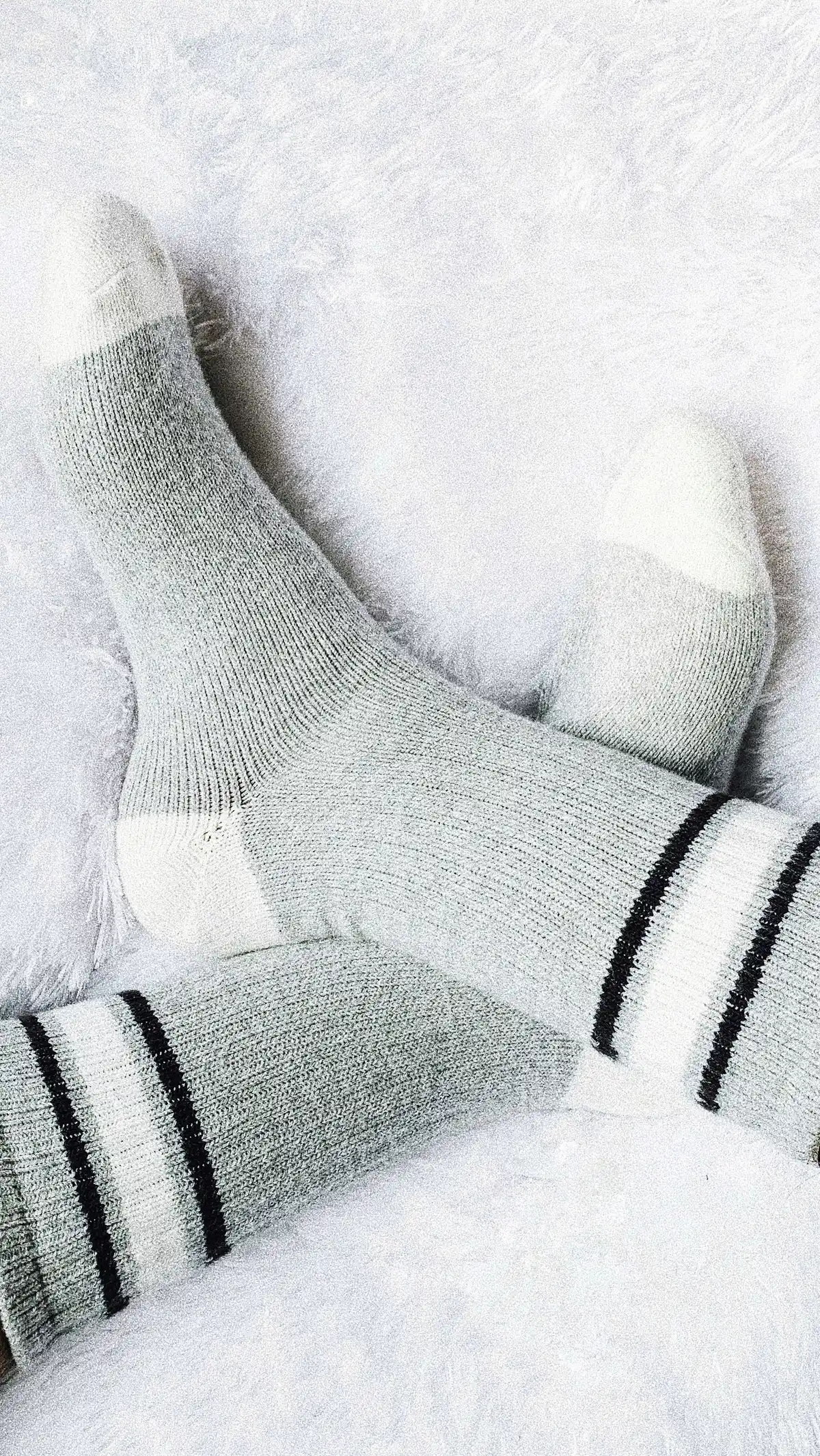
The best socks for neuropathy are seamless at the toe, moisture-wicking, lightly cushioned, and non-binding at the top. Soft merino wool or technical blends beat pure cotton. Avoid tight elastic, thick seams, and bunching. With diabetes, light colors help you spot unnoticed wounds early.
Socks sound like the least serious topic in nerve health. They're not. When sensation is reduced, your socks sit exactly where problems start — pressure, friction, moisture, unnoticed injuries. The right pair quietly prevents all four. The wrong pair quietly causes them.
You don't need a specific brand. You need to read labels like someone who knows what matters. Here's that knowledge.
What Should Neuropathy-Friendly Socks Have? The 6 Features
1. Seamless toes
That little ridge across ordinary sock toes rubs with every step. Feet that feel normally adjust automatically; numb feet don't get the memo, and friction becomes blisters. Labels to look for: "seamless toe," "flat toe seam," or "hand-linked toe."
2. Moisture-wicking fabric
Damp skin softens, and soft skin breaks. Merino wool and quality synthetics (polyester or nylon blends with spandex) move sweat away from skin. This is where pure cotton fails — it absorbs moisture and holds it against your foot for hours.
3. A non-binding top
The tight elastic band on standard socks leaves that familiar dent in your leg. On legs with compromised circulation or nerves, that dent is a daily squeeze you don't need. Non-binding tops hold gently without digging — the label to seek, especially if socks currently mark your skin.
4. Light, even cushioning
Padding under the sole spreads pressure — helpful when foot fat pads thin with age. Light-to-medium cushioning is the sweet spot; extra-thick socks change how shoes fit, which creates its own pressure points.
5. The right size, actually
Too-large socks wrinkle, and every wrinkle is a pressure line your feet may not report. Too small compresses toes. Buy your true size, and replace socks that have stretched shapeless — worn-out elastic means wandering fabric.
6. Light colors if you have diabetes
A strange-sounding tip with real logic: on white or pale socks, blood or fluid from an unfelt blister shows immediately when shoes come off. Your socks become part of the daily foot check we describe in the complete neuropathy guide.
What Should You Avoid?
- Tight elastic anywhere — if it leaves a mark, it's working against you
- Thick, ridged seams — friction generators positioned exactly at the toes
- 100% cotton for all-day wear — comfortable at 8 a.m., damp by noon
- Compression socks without medical advice — helpful for some circulation issues, risky with peripheral artery disease, which often travels with neuropathy. Ask first — see compression socks for neuropathy for the full picture.
Are "Diabetic Socks" Worth It?
"Diabetic sock" isn't a regulated term — it's shorthand for exactly the feature list above: seamless, non-binding, wicking, cushioned, often light-colored. Many are excellent. Just check the actual features rather than trusting the label, because price and quality vary widely. And no sock, however good, replaces the daily look at your own feet.
Small Sock Habits That Protect Numb Feet
- Fresh socks daily — moisture and bacteria accumulate fast
- Shake out shoes and check sock insides before putting them on — with numb feet, a pebble can go unnoticed for hours
- Change immediately when damp — after walks, workouts, or rain
- Wear socks at home instead of going barefoot — most unnoticed foot injuries happen indoors
- Moisturize before socks go on — a fragrance-free cream keeps skin from cracking under sock friction; see what actually helps
- Retire old pairs — stretched, thinned socks stop doing their quiet job
Socks are half the equation — what surrounds them decides the rest. Read Best Shoes for Neuropathy: A Practical Buying Guide for the other half.
A quick reality check
Good socks reduce risk and improve comfort — they don't treat neuropathy. If your feet are numb, tingling, or burning and you haven't had the cause investigated, that's the appointment that actually changes your story. Socks are the supporting cast.
Frequently Asked Questions
What kind of socks are best for neuropathy?
Look for seamless toes, moisture-wicking fabric, light cushioning, and a non-binding top that doesn't dig into your leg. Soft merino wool or quality synthetic blends beat pure cotton, which holds moisture. Fit matters as much as material — no bunching, no tightness.
Are diabetic socks and neuropathy socks the same thing?
They overlap heavily. Diabetic socks are simply socks designed around reduced sensation and fragile skin: seamless, non-binding, moisture-wicking, often white to reveal wounds. If you have neuropathy — diabetic or not — those same features serve you well.
Should people with neuropathy wear compression socks?
Only with a doctor's guidance. Compression helps specific circulation problems, but with peripheral artery disease it can be harmful, and PAD often coexists with neuropathy. Ask your doctor before buying compression — "non-binding" is the safer default for most people with nerve symptoms.
Why do doctors suggest white socks for numb feet?
With reduced sensation, you may not feel a blister or cut happen. On light-colored socks, a small blood or fluid stain is visible immediately when you take your shoes off — turning your socks into a daily early-warning system.
Sources
- National Institute of Neurological Disorders and Stroke — Peripheral Neuropathy. ninds.nih.gov
- CDC — Diabetes and Your Feet. cdc.gov
- American Diabetes Association — Foot care guidance. diabetes.org
- Mayo Clinic — Peripheral artery disease (PAD): Symptoms and causes. mayoclinic.org

Written by Ellen Parker
Ellen Parker is an independent health writer. She's not a doctor — she spends her days reading clinical research on peripheral neuropathy and translating it into plain English, so you don't have to face confusing information alone. More about Ellen and this site →
This article is for education only and is not medical advice. It cannot replace an evaluation by a healthcare professional who can examine you. Always talk to your doctor about your symptoms and before changing treatment. Full medical disclaimer