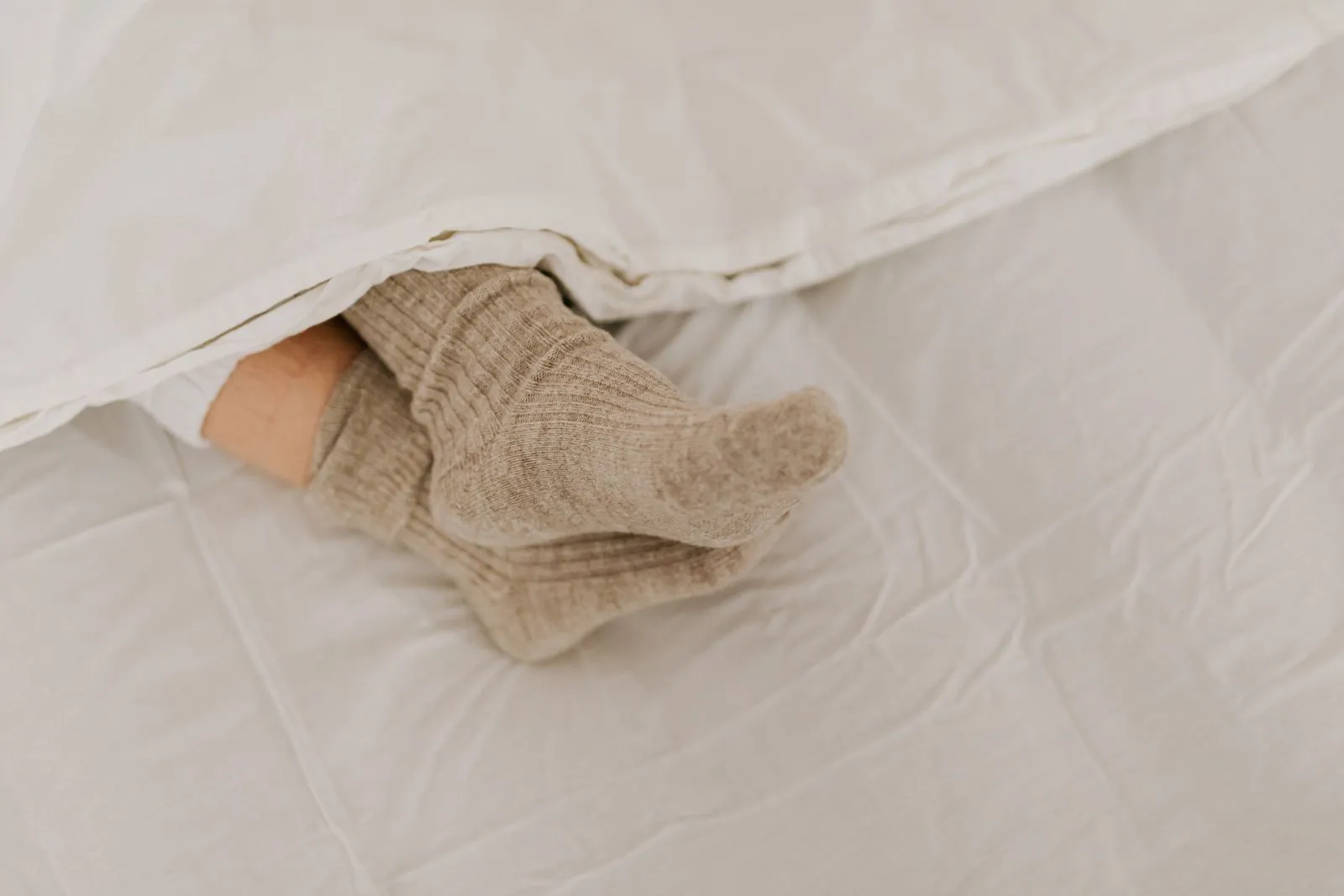
To sleep better with neuropathy in your feet, match the fix to your symptom. Keep sheets off sensitive feet with a bed cradle or loose covers. Warm cold feet safely with soft socks, never a heating pad or hot water bottle. Cool burning feet by sleeping with them uncovered. Add a steady wind-down routine: the same bedtime every night, a quiet hour before bed, and no alcohol, caffeine, or heavy meals late in the day. Keep a short plan ready for when you wake up at night. And talk to your doctor if neuropathy keeps you awake most nights, because treatment can be adjusted.
Many people with neuropathy say the same thing: the day is manageable, but the night is hard. Just as the house goes quiet and you finally lie down, your feet start burning, buzzing, or aching, or they feel so cold you can't settle.
You're not imagining it. The National Institute of Diabetes and Digestive and Kidney Diseases (NIDDK) notes that neuropathy symptoms are often worse at night. A likely reason is simply that there's less to distract you. With no movement or noise competing for your brain's attention, the signals from your feet stand out. The good news is that much of what makes nights worse is in your bedroom, and you can change it.
First, Name Your Night Symptom
Neuropathy doesn't feel the same for everyone, and the best fix depends on what keeps you awake:
- Burning or hot feet. You want to cool down and get the covers off. Our burning feet at night guide goes deeper on this one.
- Cold or numb feet. You want gentle, safe warmth.
- Touch sensitivity. Even the weight of a sheet hurts. You want nothing resting on your skin.
- An urge to move your legs. That may be restless legs syndrome, which can show up alongside neuropathy (more on that below).
Many people have more than one. Start with whichever symptom wakes you most often.
Set Up Your Bed for Sensitive Feet
1. Lift the covers off your feet. When even a light sheet feels like sandpaper, take the weight away. The NIDDK lists a bed cradle among the non-medication options for nerve pain. It's a simple frame that sits at the foot of the bed, under the covers, and holds sheets and blankets up off your legs and feet. Before buying one, try the no-cost version: untuck the sheets at the foot of the bed so they drape loosely instead of pressing down.
2. Choose breathable, smooth bedding. A soft cotton sheet with a lighter blanket on top lets heat escape and doesn't drag on your skin. Layers also let you adjust in the night: kick one off when your feet run hot, pull it back when they cool.
Warm or Cool Your Feet Safely
3. For cold feet: socks yes, heat pads no. The NIDDK's foot-care advice is clear: wear socks in bed if your feet get cold, and don't put a hot water bottle or heating pad on your feet. Neuropathy can dull your ability to feel heat, so something hot enough to burn may only feel pleasantly warm. Pick soft, seamless socks with a loose cuff that doesn't leave marks. We'd treat an electric blanket aimed at your feet with the same caution.
4. For burning feet: let them breathe. Sleeping with your feet outside the covers, or under just a thin sheet, keeps heat from building up. A short rinse in cool (not icy) water before bed can also help. Skip ice packs, for the same reason you skip heating pads: numb skin can't warn you when it's being harmed.
Build a Wind-Down Routine
Good general sleep habits matter even more when nerve pain is trying to keep you up. The National Heart, Lung, and Blood Institute (NHLBI) recommends:
- Going to bed and waking up at the same time every day, with no more than about an hour's difference on weekends.
- Using the hour before bed for quiet time, away from intense exercise and bright screens.
- Avoiding alcohol, heavy meals, nicotine, and caffeine close to bedtime. Caffeine's effects can last up to 8 hours. Alcohol matters twice over with neuropathy, because it can also damage nerves.
- Keeping your bedroom quiet, cool, and dark.
5. Take a warm, not hot, bath. NHLBI suggests a bath or relaxation techniques before bed. With neuropathy, test the water first. The NIDDK recommends using a thermometer (90° to 95°F is safe) or your elbow, never your feet, because your feet may not sense heat accurately. Keep it short, since long soaks dry out the skin.
6. Do your foot check and moisturize. The NIDDK suggests checking your feet each evening, including between your toes, for cuts, blisters, or red spots. Then apply a foot cream to the tops and bottoms of your feet, but not between the toes. A few minutes of slow, gentle foot massage while you do it can also quiet the nerves before you lie down.
7. Move during the day. A daily walk or a few gentle exercises for neuropathy earlier in the day help many people feel more settled at night. Just keep vigorous exercise out of that last hour before bed.
If your legs feel heavy or you can't stop moving them in the evening, read heavy, weak-feeling legs at night to sort out neuropathy, restless legs, and circulation. And if cold feet are your main problem, cold feet and neuropathy explains why it happens.
8. Have a Plan for When You Wake Up
Waking at 2 a.m. with buzzing feet is frustrating, and lying there tensing up makes it worse. Decide ahead of time what you'll do:
- Adjust, don't fight. Uncover burning feet, or pull on socks if they're cold.
- Get up briefly if it helps. Standing and walking on a cool floor for a minute, or a quick cool rinse, can reset the sensation. Turn on only a dim light.
- Give your brain something else to do. Slow breathing or a calm audio track gives your attention somewhere to go besides your feet.
- Leave the screen alone. Bright light tells your brain it's time to be awake.
- Note it down in the morning. A quick log of what woke you and what helped shows patterns, and gives your doctor useful information.
Is It Neuropathy or Restless Legs?
Sometimes what keeps you up isn't only nerve pain. According to the National Institute of Neurological Disorders and Stroke (NINDS), restless legs syndrome (RLS) causes an irresistible urge to move the legs, usually in the late afternoon or evening, and it can happen alongside neuropathy. NINDS notes that treating related conditions, including neuropathy, is part of managing RLS.
The clue is the urge itself. Neuropathy tends to feel like burning, tingling, or numbness that's there whether you move or not. RLS feels like you have to move, and moving brings temporary relief. If that sounds familiar, mention it to your doctor. The treatment is different.
See a doctor if…
- Neuropathy symptoms wake you up most nights or leave you exhausted during the day
- You feel a strong urge to move your legs in the evening that only moving relieves
- You find a blister, cut, or burn on your feet you didn't feel happen
- Your current nerve pain treatment isn't covering the night. Ask whether the timing or type of treatment could be adjusted, and never change a medication on your own.
- Numbness or weakness is spreading quickly over days. That needs emergency care.
A week or two of notes about your nights makes that conversation much more productive. See medications for neuropathy pain for what your doctor may discuss.
Frequently Asked Questions
Why is neuropathy worse at night?
The National Institute of Diabetes and Digestive and Kidney Diseases notes that neuropathy symptoms are often worse at night. A likely reason is that there's less to distract you: during the day, movement, noise, and activity compete for your brain's attention, while in a quiet, still bedroom the nerve signals from your feet stand out. Sheets resting on sensitive skin and changes in foot temperature can add to it.
Should I wear socks to bed with neuropathy?
If your feet get cold, yes. The NIDDK advises people with diabetes to wear socks in bed when their feet are cold, rather than warming them with a heating pad or hot water bottle. Choose soft, seamless, non-binding socks. If your main symptom is burning or heat, you may sleep better with bare feet or feet outside the covers instead.
Is it safe to use a heating pad on neuropathy feet?
It's best not to. Neuropathy can dull your ability to feel heat, so a heating pad or hot water bottle can burn your skin without you noticing. The NIDDK specifically advises against putting either on your feet. Warm socks, a warm (not hot) bath before bed, or a warmer room are safer ways to take the chill off.
How do I keep the sheets off my feet at night?
A bed cradle is a frame that sits under your covers at the foot of the bed and holds sheets and blankets up off your legs and feet. The NIDDK lists it among the non-medication options for nerve pain. Untucking the sheets at the foot of the bed so they hang loosely is a simple no-cost alternative to try first.
Sources
- National Institute of Diabetes and Digestive and Kidney Diseases — Peripheral Neuropathy. niddk.nih.gov
- National Institute of Diabetes and Digestive and Kidney Diseases — Diabetes & Foot Problems. niddk.nih.gov
- National Heart, Lung, and Blood Institute — Healthy Sleep Habits. nhlbi.nih.gov
- National Institute of Neurological Disorders and Stroke — Restless Legs Syndrome. ninds.nih.gov

Written by Ellen Parker
Ellen Parker is an independent health writer. She's not a doctor — she spends her days reading clinical research on peripheral neuropathy and translating it into plain English, so you don't have to face confusing information alone. More about Ellen and this site →
This article is for education only and is not medical advice. It cannot replace an evaluation by a healthcare professional who can examine you. Always talk to your doctor about your symptoms and before changing treatment. Full medical disclaimer